







With the growth of a variety of industries in the 19th century – mining, iron smelting, copper smelting, tinplate – came the growth of population from the workers in the townships that sprang up. This raised issues of housing, sanitation and education. There had been grammar schools for the affluent from the 16th century but the lack of state education meant that up until the second half of the 19th century in Wales education was provided by voluntary bodies, private schools, Sunday Schools and works schools. Generally the state of education in Wales was grim, a ‘destitution’ shared also by housing and sanitation.
In the middle of the 19th century there was a marked increase in the number of works schools and these needed to affiliate to one of the two voluntary societies in order to qualify for a government grant for buildings, salaries and equipment. The Llanelli and Pembrey Copperworks schools aligned themselves with the British and Foreign Schools Society which was non-denominational and would have appealed to the predominantly non-conformist working classes. In such schools the men were happier to pay the obligatory school pence. The tension gave rise to a more inclusive non-denominational or non-sectarian school in Wales.
The first Swansea works schools, the Kilvey Copperworks Schools at Foxhole, were linked to the White Rock copper companies and their proprietors Grenfell and Freeman. The schools, for girls, boys and infants, opened in 1806 and were maintained by a stoppage of 1d from the workmen. Grenfell says that he visited the infant school and heard a ‘gallery lesson’: there was a stand with a frame into which scriptural prints were placed and discussed.
The Hafod copperworks schools were built in 1847 by the Vivian family who were deeply aware of the lack of educational facilities in the Swansea district. They saw education as essential for industrial efficiency and the schools were regarded as outstanding examples of their type.
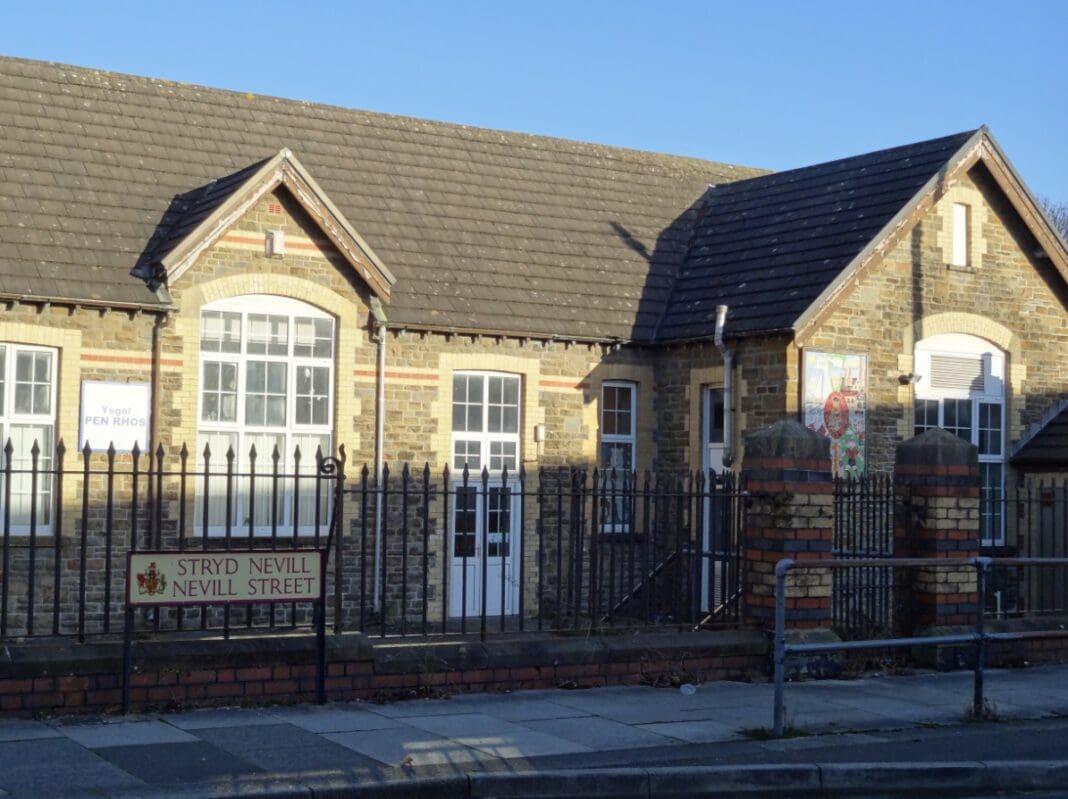
In Llanelli the school built by the Nevills, industrialists from Birmingham, was developed from a free school originally in the yard of the Copperworks. Richard Janion Nevill wanted to improve the education opportunities in the town and opened in 1846 a school for boys and infants with the girls’ school following in 1852. It served the employees of the many industrial companies of the Nevills, but also admitting other children. It was financed by stoppages from the workers’ wages and school pence. Regarded as one of the best in Wales, the curriculum was wide and also on offer was a variety of evening classes. The larger works schools offered a more advanced curriculum akin to the German schools of the day. Llanelli Copperworks School, for example, taught land surveying, algebra, geometry, astronomy and practical and inorganic chemistry for older boys.
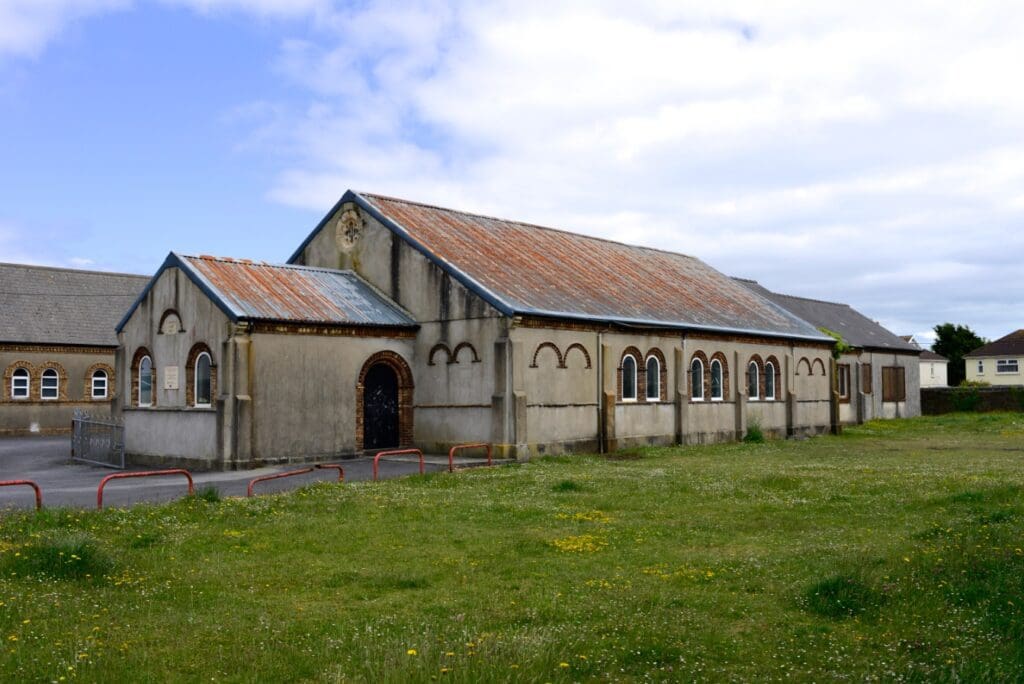
Opened in 1855, The Pembrey Copperworks School consisted of two schoolrooms, for boys and girls, each 62 x 20 ft. and one for infants, 30 x 24ft. The building cost £1,700 and the early fees were : for boys and girls of the works’ employees,1½d each week deducted from the workmen’s wages; and for other children, 2d. This raised around £90 each year, whereas the expenditure was about £200. The deficiency was covered by the proprietors of the Copper Works, George Elkington and Josiah Mason, as was also the cost of slates and books. Mason’s great business acumen along with his energy and enthusiasm brought him great wealth, yet he used it to relieve poverty in Birmingham and promote education among the poor.
The schools displayed some of the main characteristics of the works school, including an infant school and an extended curriculum compared to the day schools. In Pembrey the curriculum was taught through the medium of English and focused on the ‘3 Rs’. In addition the girls were taught scripture, geography, sewing, cutting out, knitting and domestic economy, and the boys scripture, history, vocal music and mapping.
Works schools generally provided a superior education to the day schools, were able to pay teachers a higher salary and many offered apprentices’ day classes and evening schools. At the time when use of monitors to assist the teacher was declining and more teachers were being employed, Pembrey School used the popular pupil-teacher approach (older pupils apprenticed for four or five years) while still retaining monitors, some of whom were also paid. Most of the works schools did affiliate to one of the two voluntary societies through which the government gave grants for employing teachers and training pupil-teachers.
Generally, works schools, such as those in Llanelli and Pembrey, were regarded very favourably by school inspectors and parents and tended to be more ambitious, offering a more liberal curriculum in a non-sectarian context. They were regarded as an essential part of the voluntary education system of the 19th century.