








A plain-speaking look at Council Funding in Carmarthenshire
By Cllr Terry Davies, Tyisha Ward
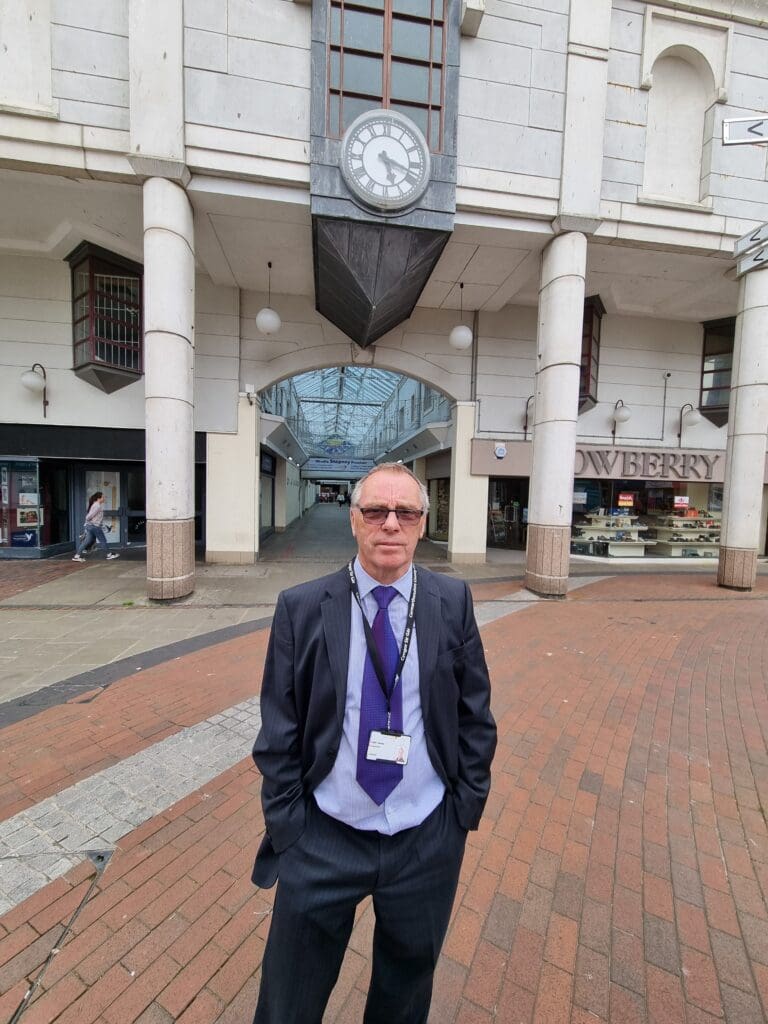
Across Carmarthenshire, people are asking a fair question: Where is all the money going? With rising costs, pressure on services, and constant debate on social media, it’s understandable that residents want clearer answers. As a councillor, I believe openness is essential — not just to explain decisions, but to renew trust in how local government works.
This article sets out, plainly and without political spin, how council funding works, why pressures are increasing, and how residents are involved in shaping the choices we make.
Let’s take Council Tax: Only One Piece of a Much Bigger Puzzle
One of the biggest misconceptions online is that council tax pays for everything. The facts are, Council tax makes up less than a quarter of Carmarthenshire’s budget approximately 17%.
The largest chunk of the council’s income to run essential services comes from the Revenue Support Grant (RSG) — funding allocated to councils by Welsh Government. Welsh Government itself depends on funding from the UK Government via the Barnett Formula, a Westminster mechanism that determines how much money Wales receives compared to England. The formula hasn’t changed since 1978 and is widely criticised in Wales for being out of date. Although Wales is rich in natural resources and energy, we are the most deprived nation in the UK, and much of that is down to unfair funding from the UK Government. Apart from the funding formula, Wales is being denied some £4billion which we should get in what’s called ‘consequential funding’ due to the disastrous HS2 railway, since the UK government insists it’s an England and Wales development, despite it coming nowhere near Wales.
Councils’ hands are largely tied by the amounts they get from the RSG. Most of the budget is already committed to the statutory services we are legally required to provide – like Social Care, Education, bin collection etc. Many people may not appreciatethat councils can’t use money from their capital funds (for building schools, residential homes, regeneration schemes etc) to run day-to-day services. When people say “the council must be sitting on a pot of money.” Apart from an emergency fund, every pound is already allocated, and because of the fiscal climate, inflation and a huge increase in the demand from adult and children’s care, many services and budgeted departments are running under intense pressure.
Let’s look at why services feel under strain and take Education Deficits as an example.
Across Wales, every local authority is facing a perfect storm in education funding — pressures shaped not by local decisions, but by longterm underfunding at national level and the changing realities of our communities.
Pupil numbers are falling. Wales recorded 4,032 fewer pupils in maintained schools in 2024, a trend that hits rural counties hardest as small schools struggle to remain viable with shrinking rolls and fixed running costs. At the same time, the number of children requiring Additional Learning Needs support is rising sharply. In 2024, 52,152 pupils were identified with ALN/SEN, and the number with formal Individual Development Plans more than doubled in a single year, reflecting both greater need and new statutory duties. Councils collectively budgeted £592 million for ALN/SEN support this year — an increase of 7.7%— yet this growth in need is not matched by growth in national funding from Westminster and some political parties want to cut this funding, or as we have just seen in the Senedd block it.
Carmarthenshire’s schools alone are forecasting an overspend of around £9.8 million, driven by staffing pressures, energy costs, building maintenance, and postpandemic attainment challenges. These pressures sit within a wider demographic shift: Wales has an ageing population, meaning fewer young people entering schools and more older residents requiring care, stretching the same limited funding across more complex services. The result is a system under strain not because of local mismanagement, but because councils are legally required to protect education budgets while national funding settlements — shaped by Westminster. UKlevel decisions — have not kept pace with rising costs, rising needs, and falling pupil numbers. These are the facts we must be open about if we want the public through social media to understand the difficult choices facing not just Carmarthenshire but every Welsh authority today. Councils must legally protect education budgets, even when costs rise faster than funding.
Social Care Demand
Carmarthenshire has some of the highest levels of deprivation in Wales. This increases demand for: Children’s services, Adult social care, Homelessness prevention, Mental health and substance misuse support. These services are essential, legally required, and very expensive. A small number of youngsters have very intense care needs. One young person with very complex needs has had to be placed at a specialist unit in England, which costs the council £20,000 a week. That’s over a million pounds a year.
Let’s look at Regeneration Costs where a lot of criticism comes from in social media.
Major regeneration projects — such as the £9.3m Tyisha Transformation and the £12m Llanelli town centre and market redevelopment — are funded through specific grants. These grants cannot be used for daytoday services. They are ringfenced for regeneration only. They are limited to projects and with Plaid they are now community-led.
National Funding Constraints
The newly appointed Welsh Government has just been in place for a few weeks. They are operating within a tight financial settlement shaped by Westminster decisions, inflation, and longterm pressures on public services. No government can deliver miracles overnight when the funding envelope is fixed externally.
Consultation: People Are Involved — Even If It’s Not Always Visible
Another common claim online is that “the council doesn’t consult us.” In reality, Carmarthenshire runs consultations on:
• Budgets
• Regeneration projects
• School reorganisation
• Housing and planning
• Community safety
• Local placemaking initiatives
But turnout is often low, and misinformation spreads faster than facts.
Do we need to improve how we communicate? We need residents to feel confident that their voice matters. Engagement is not a tickbox exercise — it is central to how we shape the future of our communities.
Scrutiny: A Vital Part of Democracy
The cross-party Scrutiny committees exist to challenge decisions, test evidence, and improve policy. Some members use scrutiny constructively. Others sadly use it as a political stage rather than a problemsolving forum. some members hardly contribute at all. When scrutiny becomes performative rather than productive, the public loses out. Good scrutiny strengthens democracy. Poor scrutiny weakens it.
The Impact of Negativity Online
Social media is powerful, but it can also be corrosive when misinformation spreads unchecked. It can be very difficult to combat ‘false news’ with the facts. Right now, negativity is:
• Undermining confidence in local services
• Discouraging investment
• Damaging staff morale
• Creating division between communities
• Fuelling distrust in both the council and Welsh Government
Constructive criticism is healthy. But constant negativity — without alternatives or facts — harms the very communities people want to protect.
A Call for Openness, Realism and Unity
Carmarthenshire faces real challenges:
• Deprivation
• Regeneration needs
• Education pressures
• Social care demand
• National funding constraints
No single council or government can solve these overnight. But working together — residents, councillors, officers, Welsh Government and local partners — is the only way forward.Openness is not just about publishing figures. It is about explaining decisions, listening to concerns, and making sure people understand how money is allocated and why. And don’t forget that Full council, Planning and Scrutiny committees are webcast, to view live or afterwards, so you can follow debates and decisions.
My commitment is simple: to keep explaining, keep engaging, and keep ensuring that residents have a genuine voice in shaping the future of Carmarthenshire.
So what of the future Llanelli stands at an important moment. The new Welsh Government has set out a programme to improve the NHS, schools, jobs and fair funding for Wales — all issues that matter deeply to our town. The opposition is understandably forceful because Welsh politics has shifted into two clear blocs Wales and Westminster with very different visions. This sharper climate will be challenging, but it also brings greater accountability and a real opportunity to repair and renew Wales, only if the London parties choose to work constructively. Our focus locally remains the same: let’s work together and many of us do, in delivering for Llanelli and ensuring our community’s voice is heard clearly by all in Cardiff Bay.