


Home Blog

How Farmers Can Extend the Working Life of Tractors and Agricultural Machinery

0

For many farms, replacing a tractor or major piece of machinery is one of the biggest capital decisions the business can make. New equipment can bring benefits, but it also comes with a substantial price tag, which means there is often a strong financial case for keeping reliable older machinery in service for as long as it remains safe and productive. The key is not simply to wait for something to fail. Extending machinery life usually depends on a combination of regular maintenance, sensible operation and quick attention to wear before it turns into a more serious problem.

Access to replacement components is part of that picture too. Suppliers such as Masseyparts can help owners of Massey Ferguson machinery source the parts needed to keep established equipment working, particularly when a tractor has reached the stage where routine wear and tear becomes more frequent. Being able to repair rather than replace can make a significant difference to a farm’s costs, especially where the machine is already paid for and still performs its main jobs effectively.

Start With Preventive Maintenance

Preventive maintenance sounds obvious, but it is still one of the most important factors in extending machinery life. Oil changes, filter replacements, lubrication and coolant checks may seem minor compared with larger repairs, yet neglecting them can shorten the life of engines, transmissions and hydraulic systems considerably. Following the manufacturer’s service intervals is usually a sensible starting point, although machines working in particularly dusty, wet or demanding conditions may need attention more frequently.

Keeping proper records can make maintenance much easier to manage. A notebook, spreadsheet or farm management system can be used to record service dates, engine hours, parts replaced and recurring faults. Over time, this gives the owner a clearer picture of the machine’s condition and can help identify patterns before a breakdown occurs.

Pay Attention to Small Changes

Older machinery often gives warning signs before something fails completely. A new vibration, an unfamiliar noise, a slight hydraulic leak or a change in engine temperature can all indicate that a component is beginning to wear. It is tempting to keep going when the machine is still working, especially during busy periods, but minor faults can become much more expensive if left unattended.

A leaking seal is a simple example. Replacing it early may be relatively straightforward, while ignoring it could eventually lead to low fluid levels, contamination or damage to another part of the system. The same principle applies to worn belts, hoses, bearings and electrical connections. Regular visual checks can therefore be just as valuable as formal servicing.

Keep Machinery Clean

Cleaning is not only about appearance. Mud, dust, crop residue and oil can hide leaks, trap moisture and accelerate corrosion. Radiators and cooling fins can also become blocked, causing engines to run hotter than they should. Machines used around livestock, fertiliser or coastal environments may face an even greater risk of corrosion because of the materials and conditions they encounter.

A sensible cleaning routine allows faults to be spotted earlier and helps protect exposed components. Pressure washing can be useful, but it should be done carefully around bearings, seals, electrical systems and other areas where forcing water into a component could cause damage. The aim is to remove harmful build-up without creating a different maintenance problem.

Use the Machine Within Its Limits

Machinery that is routinely overloaded or operated aggressively will generally wear faster. Pulling implements that are too heavy, running at excessive engine speeds or ignoring recommended load limits places additional stress on transmissions, drivetrains, clutches and hydraulic systems. Even experienced operators can fall into habits that gradually increase wear.

Good operation is partly about matching the machine to the job. If a smaller tractor is constantly being pushed to its limit, it may be worth reconsidering how work is allocated across the farm. Conversely, using a very large tractor for light jobs can increase fuel use and operating costs unnecessarily. Getting the balance right helps protect machinery while also improving efficiency.

Do Not Overlook Tyres and Running Gear

Tyres, wheel bearings, steering components and brakes have a major influence on how a tractor performs and how much strain is placed on the rest of the machine. Incorrect tyre pressures can increase fuel consumption, reduce traction and cause uneven wear. Worn steering parts may also place additional stress on tyres and suspension components.

Checking these areas regularly is particularly important on tractors that spend time both in fields and on the road. Potholes, gateways, rough ground and heavy implements can all contribute to wear. Replacing a worn component before it damages neighbouring parts is usually far cheaper than dealing with a larger failure later.

Store Equipment Properly

Not every farm has enough covered space for all its machinery, but where possible, storing tractors and implements under cover can greatly reduce weather-related deterioration. Rain, frost and prolonged exposure to sunlight can damage paintwork, wiring, rubber seals and electrical components. Moisture can also encourage corrosion in areas that are difficult to inspect.

If covered storage is not available, even smaller measures can help. Protecting vulnerable electrical connections, keeping exhausts covered on machinery that is not being used and ensuring water cannot collect in obvious areas can all reduce deterioration. Machinery that will be standing for a long period may also benefit from battery maintenance and fuel-system checks before being returned to service.

Repair With the Future in Mind

When an older machine needs attention, the cheapest immediate repair is not always the best long-term option. A temporary fix may be suitable in some circumstances, but repeated patching of the same fault can become more expensive than replacing the worn component properly. It is worth considering how long the machine is likely to remain in service and how critical it is to day-to-day operations.

The availability of new, used and refurbished parts can give owners more flexibility. A heavily used frontline tractor may justify fitting a new component, while a lightly used yard tractor could potentially be kept productive with a good-quality used or reconditioned part. The right decision depends on the machine, the job it performs and the likely cost of downtime.

Know When to Stop Spending

Extending the life of farm machinery is usually sensible, but there comes a point when repair costs can outweigh the benefits. Frequent breakdowns, difficult parts availability, excessive fuel consumption or safety concerns may indicate that a machine is approaching the end of its practical working life. At that stage, continuing to spend money on repairs can become false economy.

The aim should therefore be to get the maximum useful life from machinery rather than simply keeping it running at any cost. Well-maintained tractors can remain productive for many years, particularly where they are used for appropriate tasks and repaired promptly. By combining regular servicing, careful operation, sensible storage and timely replacement of worn parts, farmers can protect the value of their equipment and reduce the pressure to replace machinery before it is genuinely necessary.


- Advertisement -

Carmarthenshire’s Christmas pop-ups: your chance to start trading this Christmas

Carmarthenshire County Council is inviting aspiring and new businesses to take part in a series of FREE Christmas pop-up trading opportunities across Carmarthen, Llanelli and Ammanford this December.
 
Carmarthenshire’s Christmas pop-ups will give new and aspiring businesses the chance to test trade in a real market environment during the busy Christmas shopping period, while gaining experience and exposure to potential customers. This opportunity is aimed at businesses that are considering becoming regular traders in one of Carmarthenshire’s indoor or outdoor markets, or those looking to establish new business in one of the County’s towns. 

All opportunities are free and available on a first-come, first-served basis.

Where can you trade?

Carmarthen– St Catherine’s Walk (Up to 10 festive wooden trading cabins will be available)

  • 9–12 December, 10am – 4pm
  • 16–19 December, 10am – 4pm
  • 20–23 December (Sunday optional), 10am – 4pm

Llanelli – 8-10 Market Precinct (Six pop-up trading tables will be available)

  • 9–12 December, 10am – 4pm
  • 16–19 December, 10am – 4pm
  • 20–23 December (Sunday optional), 10am – 4pm

Ammanford – Ammanford Market (Four single trading pitches will be available for new and aspiring traders)

  • Friday 4 December, 10am – 4pm
  • Friday 11 December, 10am – 4pm
  • Friday 18 December, 10am – 4pm

Ammanford traders will need to provide their own equipment, with pitches allocated on arrival.

Carmarthenshire County Council’s Cabinet Member for Markets, Cllr Carys Jones said:

These free Christmas pop-up opportunities are a fantastic way for new and aspiring businesses to experience market trading, showcase their products and connect with customers. We encourage anyone considering starting a business or developing an existing idea to take this opportunity and discover what trading in Carmarthenshire could offer them.

The deadline to apply is Monday 23 November 2026.


To express your interest, email markets@carmarthenshire.gov.uk

To find out more about becoming a Trader, please visit the website.

- Advertisement -

Important changes to black bag collections as new recycling service rolls out

Residents across Carmarthenshire are being reminded that recycling and waste collection days may change for households across the county from Monday 2 November 2026. The changes coincide with the introduction of the new Separated Recycling Service, which will initially be rolled out mainly across western Carmarthenshire.

Homes will receive a letter this month confirming any changes to their collection days, along with a new collections calendar. Residents are being encouraged to check this information carefully ahead of the changes taking effect.

To help homes adjust to the new arrangements, residents whose first black bag collection, under the new schedule, falls during the weeks beginning 9 November or 16 November 2026 will be allowed to present up to four black bags for collection. This is a one-off allowance to help residents adjust to the new collection arrangements.

From the week beginning 23 November 2026, the standard limit of three black bags per collection will apply to all homes in the county.

Residents are advised to check their new collections calendar to find out when their first black bag collection is due under the new schedule.

A small number of homes will have a gap of more than three weeks between their final black bag collection, under the current schedule, and their first collection under the new schedule. Where this applies, an additional black bag collection will be provided. Affected homes will be contacted via a letter and do not need to contact the Council.

Carmarthenshire County Council’s Cabinet Member for Transport, Waste and Infrastructure Services, Cllr Edward Thomas, said:

As we roll out our new Separated Recycling service, we want to make the transition as smooth as possible for residents. We are therefore introducing a temporary four-bag allowance for some homes whose black bag collection falls on the weeks commencing 9 and 16 November, and providing a one-off additional collection for some homes. We would encourage everyone to check the information sent to them and make a note of their new collection dates.”

Residents can sign up to receive free email or text message reminders for their recycling and waste collections here.

For more information and to check your collection days, please click here.

The Council is encouraging residents to share this information with family, friends and neighbours who may rely on others for important updates.

- Advertisement -

Special school campaigners want action

Ysgol Heol Goffa, Llanelli (pic by Richard Youle and free for use for wire partners)

Campaigners are stepping up their efforts for a special school in Llanelli to have a dedicated nurse.

They have been calling for one at Ysgol Heol Goffa, which looks after 120-plus young people aged three to 19 with a range of additional needs, for years.

Welsh Government education inspectors said in a largely positive report in January the lack of a dedicated school nurse limited the ongoing health support available for pupils with complex medical needs, with school staff managing a wide range of healthcare responsibilities and relying on external professionals for updates.

Campaigner and Llanelli town councillor Shaun Greaney said four pupils had tragically died in the last six months, although not in school, and Carmarthenshire Council has stressed a causal connection between any deaths and the matter of nursing provision should not be drawn without clear evidence.

Cllr Greaney said the action group held an online meeting with Hywel Dda University Health Board representatives recently but he said they couldn’t give a guarantee a nurse would be employed, or give give a deadline for a decision, or reach a solution without the involvement of the council.

“But it was encouraging that they finally listened to the overwhelming evidence presented to them and they pledged something would be done,” he said.

Lana Dakin, of Llanelli, whose son Jac attends Ysgol Heol Goffa, said she was very worried about the lack of a nurse. Jac suffers from a rare genetic condition and has complex medical needs.

She said: “The staff at the school are great but they should not have to carry this alone. The children here have some of the most complex medical needs in our community.”

She called on the health board to provide a nurse for the school. “Children like Jac should not have to wait,” she said. “They deserve support now.”

In response to the concerns raised by Cllr Greaney and Ms Dakin, Sharon Daniel, director of nursing, quality and patient experience at Hywel Dda, said the health and wellbeing of all children and young people was a health board priority.

“We support the children and young people at Ysgol Heol Goffa with a specialist/community children nursing service to meet their universal health needs, and through the provision of training for staff at the school,” she said.

The health board’s support, she said, ensured every pupil with healthcare needs could be cared for competently and confidently within the school environment. She added health chiefs backed “ongoing actions to strengthen provision and ensure the best possible outcomes for the pupils and staff”.

The council said responsibility for commissioning and delivering school nursing services in Carmarthenshire rested with the health board.

Cllr Glynog Davies, cabinet member for education, said: “The council has repeatedly raised concerns about nursing provision and has engaged with Hywel Dda University Health Board, Welsh Government, the school and the Children’s Commissioner for Wales to seek a sustainable solution.

“The council’s position has consistently been that learners at Ysgol Heol Goffa must receive appropriate healthcare support. We have previously drawn attention to Welsh Government guidance which states that each special school should have access to at least one dedicated health board-employed registered nurse.”

Cllr Davies said the authority wanted these discussions brought to a conclusion and that currently there wasn’t a confirmed timescale for a final health board decision.

He added: “It would not be appropriate for the council to comment publicly on individual pupils or their circumstances. Nor should a causal connection be drawn between any deaths and the question of nursing provision without clear clinical evidence.”

- Advertisement -

Cumulative impact assessment areas no longer justified in Carmarthen and Llanelli

STRICT licensing requirements for new venues like bars are being relaxed in two Carmarthenshire towns because the authorities can no longer justify them.

People and businesses applying for a premises licence in Carmarthen’s Lammas Street, Nott Square, King Street and Queen Street and Llanelli’s Station Road have faced restrictions in recent years because of their cumulative impact assessment area status.

This term describes the impact several licensed premises can have in a concentrated area including on crime and disorder.

Speaking at a Carmarthenshire Council committee meeting, senior officer Heidi Neil explained that having the status put “a stronger burden” on applicants to justify a new licensed premises.

Now, following a consultation, the council has removed the cumulative impact status of the five Carmarthen and Llanelli streets and square.

A committee report said crime statistic analysis by Dyfed-Powys Police found “minimal activity” in the cumulative impact assessment areas, except for one or two specific premises. “This left police unable to justify statistically supporting the cumulative impact areas remaining,” it said.

The council’s pollution team said it couldn’t support the continuation of the cumulative impact area in Carmarthen on public nuisance grounds.

The licensing consultation which was part of the three-year review also found a decrease in concerns from respondents about anti-social behaviour, alcohol-related violence, street drinking and noise disturbance.

However it was felt there was sufficient evidence to retain so-called “hot spot” areas of alcohol-related crime and disorder on the five streets and square, plus another three streets in Carmarthen, three in Llanelli and two in Ammanford.

Referring to hot spot areas Ms Neil told the place, sustainability and climate change scrutiny committee: “New applicants will be required to demonstrate what measures they will put in place to enforce against crime and disorder.”

Cllr Kevin Madge said hot spots were starting to spill out from towns into villages. “It’s really getting out of control,” he said.

Ms Neil said there was nothing to stop them becoming hot spot areas in licensing terms if there was sufficient evidence. She added that the council continued to work closely with police.

- Advertisement -

Council tax revaluation paused in difficult budget context

0
Legislation to be brought forward to defer council tax revaluation until the next Senedd termMore targeted ways to improve the system to be exploredDecision follows detailed work over the summer to assess the cost of supporting some households through the transition
The Finance Minister has confirmed the Welsh Government will propose a later date for the planned council tax revaluation, by bringing forward legislation to defer the plans until the next Senedd term.
Speaking in the Senedd, the Minister said the decision follows detailed work over the summer to assess the costs of implementation, and the impact of updating council tax bands, which are still based on property values from 2003.
Research estimates that around a quarter of households could have seen their council tax band go up, another quarter could have seen their band go down, while around half would have seen minimal change.
For some households facing an increase, it could have meant paying hundreds of pounds more a year, and supporting those households responsibly could have cost up to £80m in the first year alone.
Cabinet Minister for Finance Elin Jones said:

“That’s a serious amount of money at a genuinely difficult time for public finances, with real pressures this year, especially in the NHS, and less funding coming from the UK Government going forward.

“Every pound has to go further right now, and we’re focused on bringing down NHS waiting lists, helping families with the cost of childcare, creating jobs, and raising educational standards.

“It wouldn’t have been fair to press ahead with this without fully supporting households, particularly at a time when household budgets are under significant pressure.

“We know the current system is unfair. Some people are still paying council tax based on what their home was worth over twenty years ago. That hasn’t changed, and neither has our view.

“This isn’t about giving up on council tax reform or retreating from fairness. It’s a practical call about timing and what we must prioritise. We’ll spend this time looking at other, more targeted ways to improve the system that don’t come with the same price tag, and we welcome any ideas.”

- Advertisement -

Llanelli Blood Donor Saves 1,000 Babies Over 60 Years 

0

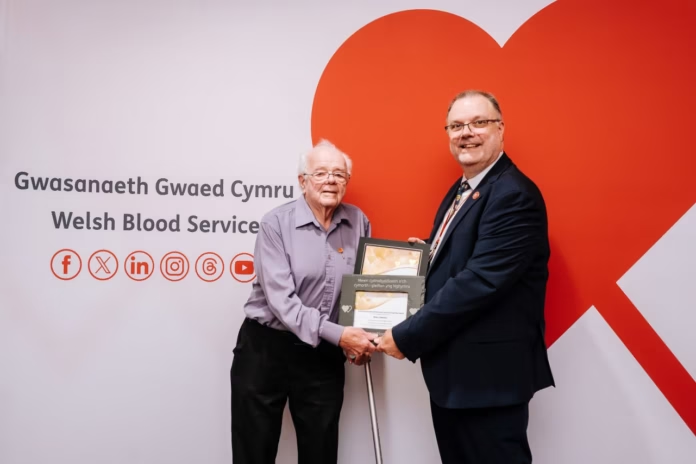
An 83-year-old Llanelli resident has been honoured by the Welsh Blood Service after making 161 blood donations over 62 years, potentially helping to save the lives of nearly 1,000 babies.

Brian Edwards is one of Wales’ longest-serving blood donors. His blood is suitable for use in neonatal care, meaning his donations could be given to babies receiving specialist treatment.

“I can’t put into words how it feels to have helped that many babies,” Brian said.

“I always wanted to help people in some way, and when the blood service came to my workplace, that was the start of it all.”

Brian made his first donation in 1964 while working at an oil refinery in Llandarcy, Neath.

He said: “A friend was going to donate and asked whether I wanted to go with him. It was so simple. After that first donation, I made a pledge that I would continue for the rest of my life if I could.”

Brian made his 161st and final donation in February 2026. Although he is no longer able to donate, he is encouraging others to continue what he started.

“I’m incredibly proud to have spent so much of my life helping other people,” he said. “I’m sad that I can no longer donate, but I hope others will take my place because there are patients who desperately need people to come forward and donate blood.”

Peter Richardson, Deputy Director at the Welsh Blood Service, presented Brian with his award. He said: “Brian’s commitment to helping others through blood donation is truly remarkable. Over more than six decades, he has quietly made an extraordinary contribution to patient care across Wales.

“Donors giving blood do not only help patients; it gives families more precious time with the people they love. Brian’s donations may have supported the care of nearly 1,000 babies, which is an incredible legacy.”

Brian was just one of more than 50 donors being celebrated on the night for reaching milestones in whole blood or platelet donation, and for making a stem cell donation. Collectively, those donors have made nearly 3,500 donations, meaning they may have saved more than 10,000 lives across the country.

The Welsh Blood Service needs to collect around 350 blood donations every day to meet demand from hospitals across Wales.

Peter added: “We have a fantastic community of loyal donors, but we always need more people to come forward. Blood donations support cancer treatment, emergency and trauma care, and specialist treatment for mothers and babies.

“Brian’s story shows the extraordinary difference one donor can make. We would encourage anyone who is eligible to consider booking an appointment and beginning their own donation journey.”

Every single donation makes a difference. To check your eligibility or book an appointment, visit welshblood.org.uk or call 0800 252 266.

- Advertisement -

373 homes built in the county in 2025-26

The number of houses built in Carmarthenshire crept up in 2025-26 but was below a council forecast.

A report before the council’s cabinet said 373 homes were completed in 2025-26, which was fewer than the 520 that had been projected at this point last year but 11 more than were completed in 2024-25. A further 337 were under construction.

Councils have long-term planning blueprints called local development plans (LDPs) which put a figure on how many new homes are likely to be needed.

The current development plan in Carmarthenshire identified a requirement of 15,197 homes over 15 years up to 2021, which works out as almost exactly 1,013 per year on average. It’s still in force while a revised plan looking ahead to 2033 is being finalised.

The annual LDP monitoring report before cabinet said housing completions have only exceeded 700 twice since 2007-08. In one year, 2022-23, they dropped to 229.

“The reasons for the decrease could only be speculated upon but could include the cost of living crisis, the number of available sites, and the fact that the adopted LDP is now past its end date, or even the after-effects of the Covid-19 pandemic,” said the cabinet report, repeating word for word what was written in last year’s monitoring report.

Cllr Carys Jones, cabinet member for rural affairs, communities and Welsh language, said environmental constraints, housing delivery and infrastructure requirements “remain key planning challenges”.

She said flood risk planning policy in Wales had been updated, strengthening requirements about building in flood-prone areas.

“This has implications for [housing] site allocations and future development opportunities across the county,” she said.

Concerns about levels of polluting dissolved inorganic nitrogen in marine special areas of conservation including the Burry Inlet was another issue, she said, as some planned housing developments may have to prove they won’t add to that pollution via the wastewater they generate or provide mitigation measures.

Cllr Jones said monitoring of the LDP confirmed that it remained effective but “it does highlight the growing importance of environmental regulation”.

Cllr Emlyn Schiavone said: “The circumstances are challenging with more need for housing but also the importance of protecting our communities who are facing severe flooding.”

Carmarthenshire’s population is around 190,000. The LDP monitoring report also included data on “primary retail” vacancy rates, which fell in Llanelli and Ammanford in 2025-26 but increased in Carmarthen.

- Advertisement -

Cabinet considers motion calling for two annual cuts as a minimum

Gelliwerdd park, Glanaman, where there have been complaints about the park being overgrown (pic by Fran Griffin and free for use for all BBC wire partners)

Councillors who demanded more cuts of overgrown grass verges and rights of way in Carmarthenshire will be told how much it would cost before any decisions are made.

The cabinet member responsible for finance has warned against using money held in reserves though.

Full council passed a motion in the summer calling for two annual cuts of verges, roundabouts, and public rights of way as a minimum rather than the current one cut per year.

The motion said there were widespread concerns about their overgrown state and that two people couldn’t walk side-by-side on many popular paths.

It added: “Carmarthenshire has some of the most beautiful landscapes and backdrops in Wales and encourages holidaymakers and visitors alike to visit but this unchecked growth can only have a negative visitor experience, including making roadside signage difficult to read, which will have a detrimental effect to the tourist industry we promote and want to grow.”

The motion asked cabinet to examine ways of funding it even if it meant using reserves.

A cabinet meeting on October 19 heard a previous decision to reduce the annual cuts to one was made by full council on financial grounds.

Cllr Alun Lenny, cabinet member for resources, said he appreciated the reason for the motion but said it would be very difficult to see where any additional funding would come from.

And he cautioned against using money in reserves as some of it might have to be deployed to support council services which, he said, faced an estimated £11m overspend for the 2026-27 financial year. Savings of £12m “at least” were being earmarked, he added, to try to balance the council’s books.

Cllr Lenny recommended asking the relevant department to provide a cost of a second grass cut so that councillors could weigh it up against other budget pressures.

“The original decision was approved by full council and it will be up to the council to discuss if they want to reverse it or not,” he said. Cabinet approved the recommendation.

- Advertisement -

ASau a chynghorwyr Plaid Cymru yn Sir Gaerfyrddin yn galw am eglurder cyn cynnig i uno gwasanaethau meddygon teulu 

Mae Aelodau Plaid Cymru o’r Senedd dros Sir Gaerfyrddin – Cefin Campbell, Nerys Evans ac Adam Price – ynghyd â’r cynghorwyr lleol Alex Evans, Tyssul Evans a Meinir James, wedi gofyn i Fwrdd Iechyd Prifysgol Hywel Dda am fanylion cynnig i uno dau wasanaeth meddyg teulu yng Nghwm Gwendraeth, cyn cyfnod ymgynghori ar y penderfyniad terfynol. 

Mae dyfodol Meddygfa’r Sarn ym Mhontiets wedi bod yn ansicr ers nifer o flynyddoedd. Yn dilyn cadarnhad na chafwyd unrhyw gynnig i redeg y feddygfa fel rhan o broses dendro Hywel Dda, mae’r bwrdd iechyd wedi datgan eu bwriad i ymgynghori ar ei uno â Meddygfa Minafon yng Nghydweli. 

Roedd yr opsiwn hwn ymhlith y rhai oedd yn cael eu galw amdanynt gan ymgyrchwyr yn ogystal â gwleidyddion lleol Plaid Cymru yn galw amdano, sydd wedi dweud eu bod yn “optimistaidd tra’n cadw golwg barcud” ar y sefyllfa. 

Ymhlith y cwestiynau a godwyd yn y llythyr oedd: a fyddai manylion llawn y cynnig i uno yn cael eu cyhoeddi cyn dechrau’r broses ymgysylltu; a fyddai digon o gyfleoedd i drigolion a chleifion yn y gymuned ymgysylltu wyneb yn wyneb; a pham mai uno yw’r opsiwn a ffefrir bellach. 

Gofynnwyd hefyd i’r bwrdd iechyd roi sicrwydd y bydd digon o staff, y bydd ystod lawn o wasanaethau yn parhau i gael eu darparu, a gofynnwyd am yr amserlen ar gyfer gweithredu’r uno. 

Yn y llythyr ar y cyd, dywedodd Aelodau o’r Senedd a chynghorwyr Plaid Cymru: 

“Mae cynnal meddygfa ym Mhontiets yn hynod bwysig i drigolion lleol, yn enwedig cleifion hŷn a’r rhai sy’n fwy agored i niwed, a allai ei chael hi’n anodd teithio i rywle arall. Felly, rydym yn optimistaidd tra’n cadw golwg barcud wedi cyhoeddiad y Bwrdd Iechyd. 

“Fodd bynnag, i bobl leol, nid y cwestiwn yw a fydd y feddygfa’n aros ar agor yn unig sydd, ond pa lefel o wasanaeth y gallen nhw ei ddisgwyl yn y dyfodol. Rhaid i gadw’r feddygfa ar agor hefyd olygu darparu gwasanaethau meddyg teulu hygyrch y gall cleifion ddibynnu arnynt.” 

“Mae pobl leol wedi wynebu ansicrwydd sylweddol ynghylch dyfodol eu meddygfa yn ystod y misoedd diwethaf. Yn ein barn ni, bydd llwyddiant y broses hon yn dibynnu nid yn unig ar y cynnig ei hun, ond hefyd ar barodrwydd y Bwrdd Iechyd i ymgysylltu’n agored â’r gymuned a darparu atebion clir i bryderon dilys ynghylch mynediad, staffio, gwasanaethau a dyfodol hirdymor darpariaeth gofal sylfaenol yn Nyffryn Gwendraeth. 

“Byddem yn croesawu ymateb manwl i’r cwestiynau hyn, a byddem yn ddiolchgar pe gellid gwneud yr wybodaeth ar gael i’r cyhoedd cyn y broses ymgysylltu, lle bynnag y bo modd.” 

- Advertisement -
Llanelli
moderate rain
11.2 ° C
11.6 °
10.9 °
95%
6.2m/s
75%
Thu
11 °
Fri
12 °
Sat
14 °
Sun
11 °
Mon
15 °