







Are you beetling about doing your Christmas shopping? The phrase comes from the scurrying activities of our most widespread family of insects.
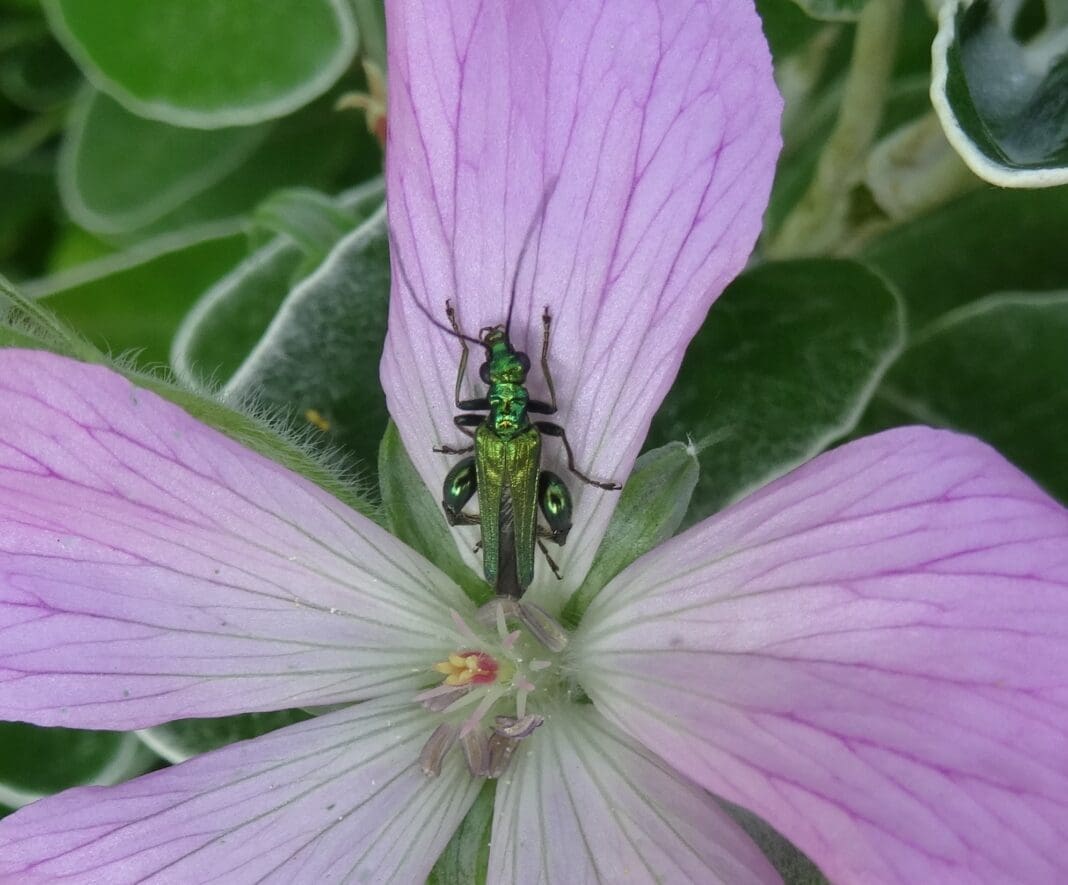
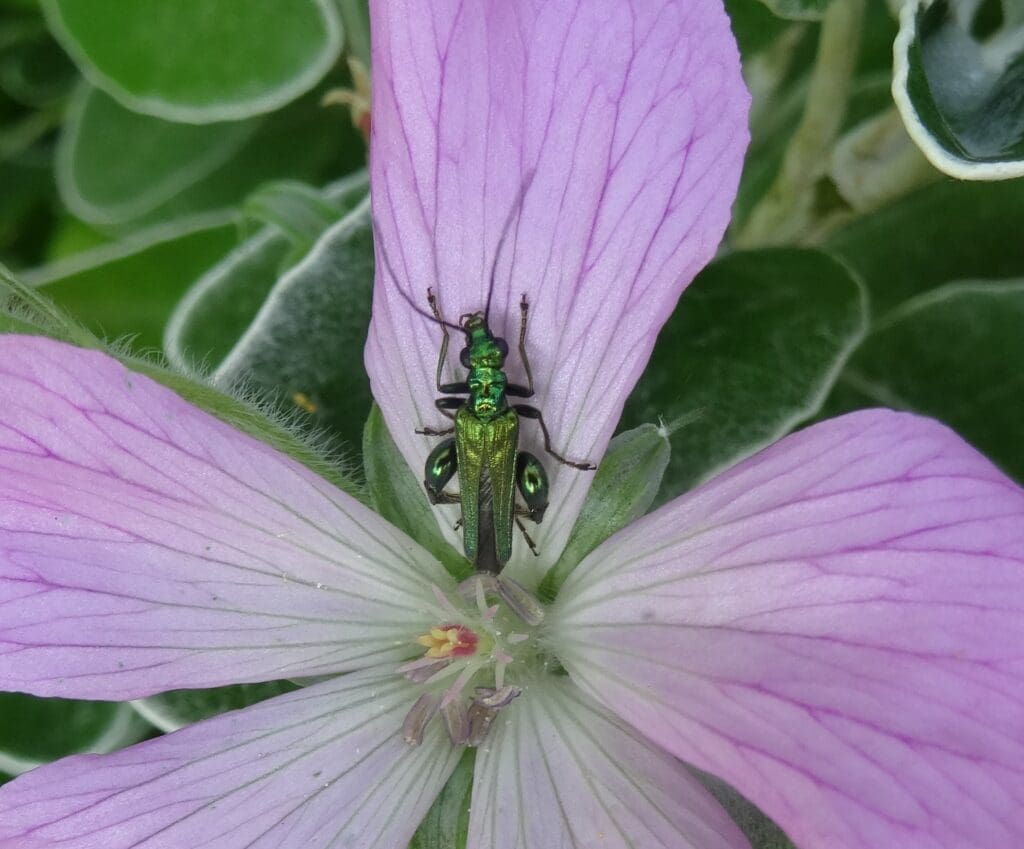
There are more species of beetle in the world than of any other type of animal, making up around a quarter of all known animal life-forms. Worldwide there are around 400,000 described species of beetle, with over 4,200 in Britain and Ireland. They can be found in almost any environment, feeding on all sorts of foods. Many go unnoticed as they live in the soil, leaf litter or within wood. The majority are black, although flower and leaf beetles can be very colourful.
Most beloved perhaps are the ladybirds, with spots ranging from 2 to 24. Not all are red – some, such as the 14-spot and 22-spot are actually yellow, while others, such as the Water Ladybird and 16-spot, are beige. Some are even black and, just to confuse matters, some don’t even have spots! Most of the common ones overwinter as adults and feed on aphids.
Beetles (order Coleoptera) have hard outer wing cases (elytra) protecting the more delicate and membranous hind wings beneath. The elytra are actually modified forewings, probably to allow crawling into crevices without damaging the functional wings. During their life cycle they develop from eggs into larvae which usually have a different diet from the adult, moult through several growth stages (instars), and pupate before becoming adults. Beetles are not the same as true bugs, the main difference being that bugs do not have a pupal stage and the larvae eat the same food as the adults.
Antennae can be very short, as in the aquatic whirligig beetle, or up to twice the length of the body as in long-horn beetles. Their legs are shaped to suit their way of life, so beetles that are more active have longer legs, and those of aquatic beetles are expanded and fringed with hairs to form paddles.
Some live in association with fungi or social insects such as ants. Some species invade ants’ nests and produce chemical signals so they are accepted as and tended by ants.
In Carmarthen Bay we have the rare Strandline beetle (Eurynebria complanata) which spends the summer at the top of the beach eating sand-hoppers and hiding under driftwood, but as the amount of cover decreases so does the beetle population.
If you are beguiled by beetles there is plenty of information on buglife.org.uk, coleoptera.org.uk or ukbeetles.co.uk.
Did you know your winter Robin (Erithacus rubecula) may have come from colder parts of Europe? Likewise, our robins can fly south, perhaps as far as Spain.
Reindeer lichen refers to a few similar species of greyish many-branched lichens which form cushions, often in pockets of soil attached to rocky outcrops. They are composite organisms made up of fungi and green algae. The fungi provide nutrients and protection, allowing the algae to photosynthesize and produce sugars for the fungi.
We had a change of programme on 7th November when our Chairman Richard Pryce gave a talk entitled “SN40, the 10km square with the highest number of plant species in Wales”. SN40 refers to the area between Kidwelly and Sandy Water Park, from Pontyates to the coast. The wide variety of habitats found in this area accounts for the high number of plant species recorded (currently 1844). Habitats range from coal tips to salt marsh, from bogs and heathland to farmland and grazing marsh, with both acid and alkaline soils. Richard described a selection of plants found in the area, comparing current populations to those found twenty years ago.
2023 is our 50th Anniversary! Llanelli Naturalists was formed back in 1973 by a group of local nature enthusiasts, some of whom are still involved in the society. We will be producing a bumper edition of our members’ Newsletter in the spring with an overview of the past fifty years in Llanelli, as well as all the usual articles.
Tip of the month: why not wrap up warm and visit a nature reserve over Christmas. We have plenty in Carmarthenshire run by Carmarthenshire County Council, as well as Wildlife Trust reserves and of course WWT Llanelli.
What’s happening this month:
5th December: our Christmas Social, where members bring food to share, and some will be showing their own slides of wildlife interest. 7.30pm at EJ’s Cafe Bar and Restaurant, Vauxhall Road, Llanelli.
14th December: Carmarthenshire Bird Club talk – Dave Astins on the Birds of Oman. 7.30 at Llanelli Cricket Club, Denham Avenue.
17th December: Walk with a Warden at WWT Llanelli, focusing on ducks and waders and their tracks. Meet 11.30 at info desk.
We wish a MERRY CHRISTMAS to all our members and readers.
Our thanks to Carmarthenshire Nature Partnership for content.
Info: hainesveronica@hotmail.com. Website: www.llanellinaturalists.org.uk, Facebook: www.facebook.com/llanellinaturalists.