











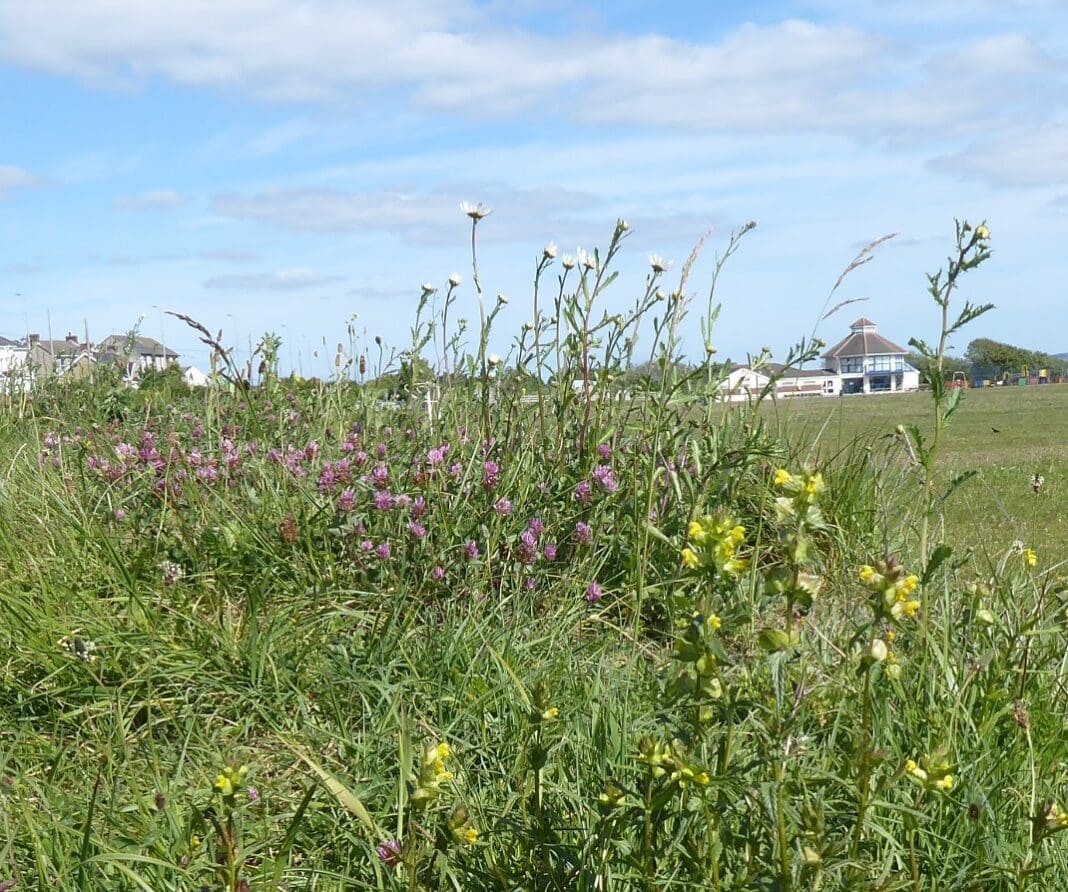

Gardens are an important source of nectar for our bees and butterflies. As well as providing a wide range of flowers in herbaceous and shrub borders, an interesting way to encourage the growth of wildflowers in your garden is to leave the grass grow. Even mowing it less often will have an effect. Try leaving it throughout May and you will be surprised how many flowers you get. If you leave it longer you will get a greater variety of plants. It will also be a lot less work! Plantlife recommend mowing some grass every four weeks and letting some grow long enough for the taller species to flower and set seed. Grass of different lengths will suit different invertebrates, and a variety of wildflowers will attract a greater range of pollinators, providing nectar throughout the year. When you do cut the grass, removing the cuttings will reduce the fertility of the soil and favour the growth of flowers over grass. Long grass may also attract other invertebrates such as grasshoppers and soldier beetles. All these insects will in turn provide food for birds, as will the grass and flower seeds, so you win every way. You will also experience the joy of finding unexpected plants, and insects you didn’t know existed.
To follow the No Mow May campaign just look up the website, where there are also details of Plantlife’s Every Flower Counts survey taking place 23rd-31st May. For more information on garden management for bees see the Gardening section of the Bumblebee Conservation Trust website.
Parks can also play a big role in helping pollinators and biodiversity. For several years, with the cooperation of Llanelli Rural Council, a corner of Pwll Park has been left to grow wild (cut only in the autumn), with the result that more than 20 wildflower species were seen there last summer, attracting bees, butterflies, insects and birds.
Have you noticed all the molehills this year? Moles (Talpa europaea) are solitary creatures, which live about three years and are most active in spring. They eat mainly earthworms, so if you have a mole in your garden it means you have plenty of worms in your soil. Their burrows help aerate the soil, improve drainage and provide homes for other small mammals. The excavated earth is good topsoil and can be used to make excellent potting compost. Moles can create difficulties for farmers if molehills become mixed with grass in silage bales, so this is an added reason to tolerate a mole in your garden.
This month, look out for these wildflowers in hedgerows and meadows: Oxeye Daisy , Red Clover, Meadow Buttercup, Bush Vetch, Hawthorn blossom, Red Campion, White Campion, Cow Parsley, Stitchwort, Yellow Iris and, of course, don’t miss the Bluebells in the woods!
The Carmarthenshire Nature Partnership distributes a set of Nature Notes every quarter. You can see some posted on our Facebook page. The latest Notes, covering January to March, include such topics as Star Jelly, Hair Ice and Elf Cups. The 8-page set can be found in the Download section of their website: Carmarthenshire Nature Partnership (gov.wales). Anyone wishing to subscribe to future Notes directly can contact biodiversity@carmarthenshire.gov.uk .

What’s happening this month:
2nd May is International Dawn Chorus Day, celebrated in over 80 countries. A good excuse to get up early and just listen – some of the birdsong you may hear can be found on www.wildlifetrusts.org/dawn-chorus-day.
Hedgehog Awareness Week runs from 2nd – 8th May and is organised by the British Hedgehog Preservation Society. This annual event helps to highlight the problems hedgehogs face and how we can help them. More info in the News section of their website: www.britishhedgehogs.org.uk/
22nd May is the UN International Day for Biological Biodiversity. This year the theme is “We’re part of the solution”. Details on www.cbd.int/biodiversity-day.
WALES NATURE WEEK takes place from 29th May to 6th June. To start the week, the four Local Environmental Records Centres in Wales are holding the Wales Garden Bioblitz on Saturday 29th May. Check back to the Biodiversity Information Service website for the latest news. This coincides with nature week events at the National Botanic Garden of Wales. Just look up Wales Nature Week for lots of information.
Tip of the month: Mow paths through your grassy areas or, even better, lay stepping stones (45cm sq recommended) along your usual routes through the garden. This will reduce compaction of the soil and disturbance to the grass, flowers and any wildlife underfoot. Your shoes will stay dry too as you admire what is growing around you.
Our thanks to David Poulter for his contributions.
Our annual Newsletter should be out in the next month. For more information contact: hainesveronica@hotmail.com or see our website: www.llanellinaturalists.org.uk or Facebook page: www.facebook.com/llanellinaturalists