











A court case has been withdrawn, which was set to call into question the lawfulness of the “hospitalisation rule” which has negatively affected individuals on disability benefits.
The so-called “hospitalisation rule” states that individuals requiring care at a hospital for over 28 days have their entitlement to any benefits they might be receiving suspended.
The regulation recently came into greater scrutiny in the public sphere after 20 year old Cameron Mitchell of Carlisle, who cannot walk or speak, had stated he hopes to challenge the rule in court after having his benefits paused after 28 days in a hospital stay that lasted 128 days in total. The court case has since been withdrawn.
Cameron is one of many disabled individuals affected by the rule, which charities claim disproportionately affects individuals with additional needs. Families of individuals affected have said that caring for their loved ones in extended stays of care has required additional expenses, which has only been exacerbated by the hospitalisation rule.
However, the UK government has said that suspension of benefits during an extended hospital stay is intended to help out taxpayers, preventing them from being required to “pay double”.
Critics have pointed out that the rule especially affects those with profound and multiple learning difficulties, who are more likely to need extended hospital stays.
“Needs don’t change” is the central core of arguments from critics of the rule, and that an individual’s disabilities do not disappear while they’re in extended care, and that the costs incurred by family members (who themselves are most likely to be an individual’s carers) after often higher during such times.
Dan Scorer, head of policy for learning disability charity Mencap, said that individuals with profound and multiple learning difficulties (PMLD) are “more likely to fall foul of the 28-day rule”.
The ability for carers and family to carry on with their care duties is undermined by the lack of financial support, he said.
He said:
“We understand that the current [legal] claim has been withdrawn, but we remain committed to working with people impacted by the policy to challenge its fairness.
While the NHS is taking steps to support family carers and acknowledge the important role they play in contributing to successfully managing hospital stays for their loved ones with a learning disability, the benefits system has this arbitrary 28-day cliff edge after which support is stopped.“
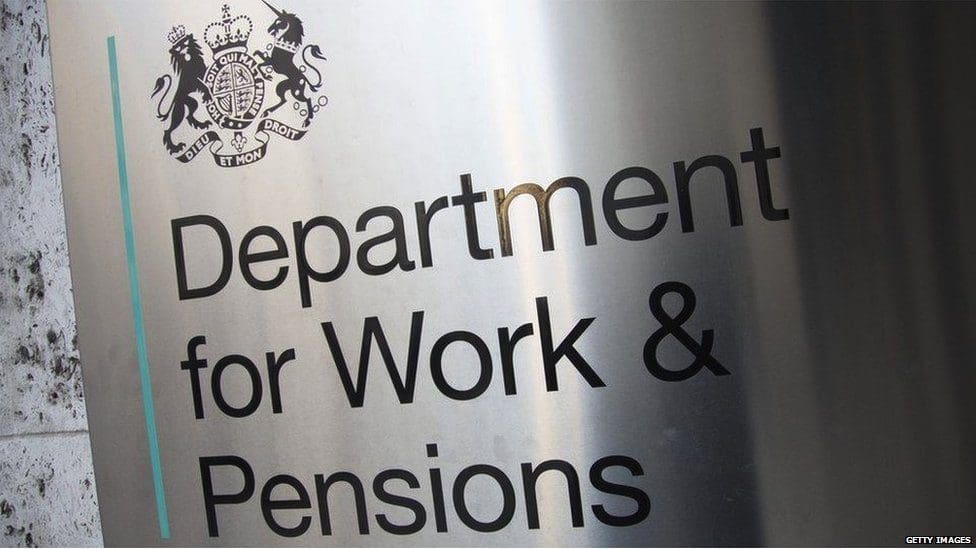
Campaigners who fight against this law also cite the case of Cameron Mathieson who, at 5 years old, had his disability suspended after 12 weeks in hospital. His family fought and won a 4 year legal battle which went before the Supreme Court, where Judges agreed that the Department for Work and Pensions had been “grossly unfair” when it stopped his payments.
Cameron, from Warington in Cheshire, died in 2012 after he had cystic fibrosis and Duchenne muscular dystrophy, among other conditions.
Campaigners and activists believe that the rule is applied unfairly, with no consideration of circumstances. Rheian Davies (she/her), head of the legal unit at the mental health charity Mind, said:
“At Mind, we believe the basis for the ‘hospitalisation rule’ should not be the length of the stay, but instead the needs of the patient, and whether they continue to have care needs while in hospital.”
The DWP says that the rule is in place to “avoid double provision from public funds”, and a spokesperson has said:
“We are committed to ensuring that disabled people get all the support to which they are entitled. It is a long-standing rule that payment of extra costs benefits, such as Personal Independence Payment, is suspended after the first 28 days in a hospital or similar institution, to avoid double provision from public funds.
“While the number of hospitalisation suspensions has gone up so has the number of PIP awards; suspensions still form a very small proportion of the overall PIP caseload.”
In Carmarthenshire there were 150 suspensions of PIP in the quarter to the end of April 2020, which increased to 180 suspensions by the end of April 2021, and increased again to 210 suspensions by the end of April 2022.
With a total caseload number of 13,640 in the financial year ending in April 2022, this is a 40% increase from April 2020, to April 2022.
Some believe that the ongoing cost of living crisis will exacerbate the stress and complications to mental health that the ruling has caused some individuals.