










Let’s say you want to check a particular restaurant’s reviews. What’s the first thing that comes to mind when you check a restaurant’s reviews? Is it particularly visiting the restaurant’s physical location? Or do you ask diners about their experience? Or do you prefer to take out your phone or laptop, visit Google, or open your favorite food delivery app, check the ratings and reviews, the menu, operating hours, and other related information?
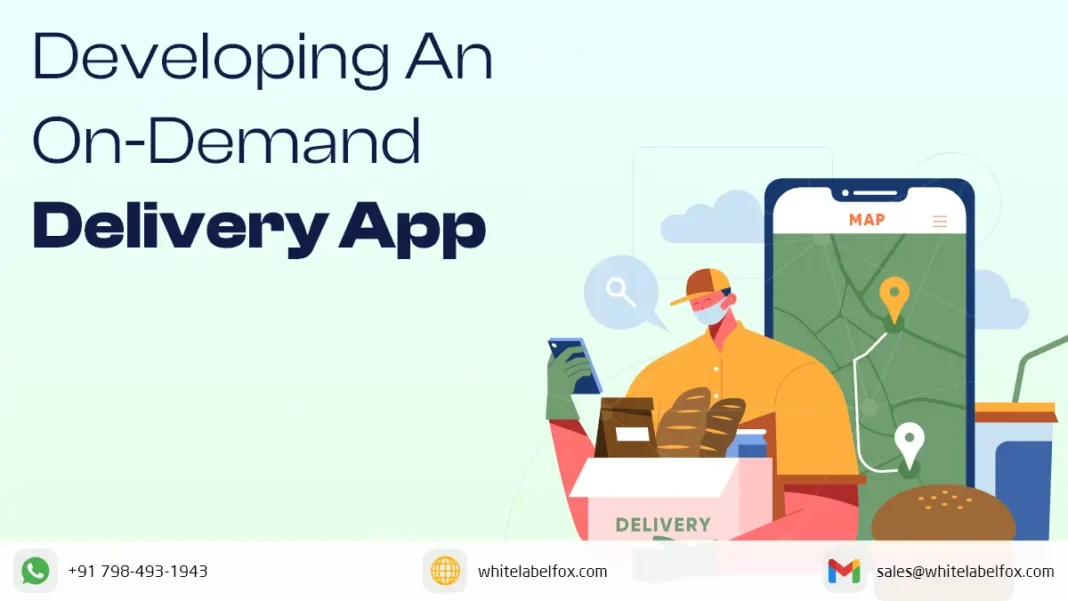
Yes, on-demand apps have become the go-to option for modern people to get things done quickly. Be it for entertainment purposes, daily utilities, or making payments, on-demand delivery apps offer all. Online delivery apps are convenient for users and reduce friction while ordering. For local businesses, they are a must-have to boost online presence and revenue.
If you are interested in this lucrative business model and want to develop a next-gen on-demand delivery app, this blog is for you. But first, let’s start with the meaning.
What is an On-demand Delivery App?
The on-demand delivery app is a platform that comes with stunning features and enables entrepreneurs to enter the on-demand delivery sector within the least possible time. Popular on-demand delivery apps are categorized into different sections, such as:
- On-demand food delivery apps: GrubHub, UberEats, Zomato, Talabat
- On-demand grocery delivery apps: Instacart, AmazonFresh, FreshDirect, BigBasket
- Multi-delivery service apps: Swiggy, Grab, Rappi, Gojek
There can be other various domains also that are not listed here. But these are the main categories to look for. Technological advancements and evolving customer preferences have recently gained popularity in the on-demand delivery sector.
How Does On-demand Delivery Work?
Going deep into the mechanism of popular names like UberEats, Instacart, Doordash, and Zomato reveals a carefully organized process that seamlessly connects all the stakeholders – users- restaurants/stores, drivers, and admin. Let’s have a look at the process for better understanding:
- The process commences with downloading user-friendly delivery apps, allowing customers to browse products and place orders.
- They can add products to the cart once they decide what to order from which restaurant or store. Once an order is placed, the store or restaurant confirms and prepares it.
- Once the order gets ready for dispatch, the restaurant or store assigns the order to nearby drivers.
- When assigning delivery, the on-demand delivery app considers several factors, such as distance, traffic conditions, and order size, for the optimized delivery.
- With the in-app navigation system, the delivery provider picks up the order and heads towards the user’s location. Meanwhile, a user can track this entire process in real time and know the ETA of the order.
- The driver delivers the order to the user and asks them to make the payment if they have chosen the COD option while placing the order.
- Post delivery, drivers and users are free to rate the service and leave reviews about the restaurant or store based on the overall delivery experience.
Types of On-demand Delivery Applications
On-demand delivery applications have changed how products and services access and reach preferred locations. These popular platforms cater to various needs, from business-to-business to direct consumer interactions, cultivating seamless operations of products and services.
Business to Business (B2B)
Helps in business dealings and the moving of products between various brands within supply networks. Some examples include those that offer services to match wholesalers with retailers, including Alibaba or Amazon Business.
Business to Customers (B2C)
Allows businesses to directly supply organizations, companies, or people with commodities and services. Some well-known examples are food delivery apps like UberEats and grocery delivery services like Instacart.
Consumers to Consumers(C2C)
Promote the concept whereby customers and producers of goods or services transact directly. Some examples include eBay and Craigslist, where people can sell used goods or services offered to them.
Enterprise to Person(E2P)
It involves enterprises offering services or goods to the public. Some examples include healthcare services that companies such as Doctor on Demand provide to patients at their residences.
It is important to understand that each type targets different markets while using technology to make the necessary operations more effective and convenient for businesses and consumers.
Stepwise Guide to Building an On-demand Delivery App
Building a powerful and robust on-demand delivery app needs a structured roadmap and planning. Perform the below-mentioned steps to turn your unique idea into a solid digital product.
Market Research is Necessary
Understanding your ideal audience’s preferences and emerging market trends is vital. Conduct thorough research to identify the loopholes in existing services and think about how your service can make a difference. Additionally, analyze competitor’s offerings and try to offer something new that sets you apart from the crowd.
Enlist Your USP (Unique Selling Points)
Differentiate your on-demand delivery app by identifying what makes your app unique from others. Whether in quick delivery, discount, exceptional services, or dedicated customer support. Enlist your USPs to attract users and investors.
Work on Features and Functionality
List down the core features you want to integrate into your delivery app. User-friendly interface, push notifications, secure payment options, real-time tracking, in-app chat, etc., are must-have features. However, consider something new and incorporate emerging features that make your on-demand delivery app unique.
Pay Attention to UI/UX
Build appealing and captivating designs that attract users and allow them to browse services without glitches. From smooth navigation to clear content to CTA to consistent
branding, concentrating on design, and conducting usability testing for better performance.
Choose the Right Technology
Once you finish the design part, it’s time to integrate all the features and build a strong back-end infrastructure. Whether you choose a native, hybrid, or cross-platform, ensure your delivery app offers a seamless experience across all devices. Choose the right database system, framework, and libraries for a rapid and robust development process.
Test and Launch
Post development, test your app. Check all the features on various devices to ensure seamless functionality and performance. Opt for beta testing, gather feedback, and make improvements if required. Once you are satisfied with the testing and the app’s performance, launch your on-demand delivery app on the store and run marketing campaigns to attract users.
By performing these steps, you can lay a strong foundation for your on-demand delivery app and anticipate making a big hit in the market.
Final Words
From the above-detailed guide, we can clearly say that on-demand delivery apps are the future. People’s increasing inclination toward convenience and the introduction of new technology are the two major reasons that make the on-demand delivery sector promising. Startups, small businesses, and even large businesses are gaining a competitive advantage that simply wasn’t feasible a couple of years ago.
The low barriers to entry and cost-effective operating costs make the on-demand delivery business appealing. If you have a detailed understanding of this market and want to try your luck, you may have a formula for success.